
DeKalb Projected Versus Actual Release
A projected date is a planning or sentence-computation field. An actual release date records an event that already occurred. For GDC custody, the Maximum Release Date, or MRD, reflects the sentence endpoint calculated by corrections. A Tentative Parole Month, or TPM, is the Board’s tentative month for final parole review. Neither one guarantees the day a person will walk out.
Pretrial detention works differently. Someone awaiting case disposition at DeKalb County Jail has no sentence-based release date. Bond, a judicial order, dismissal, time served, or a detainer can control what happens next. Even when bond is posted, processing and other holds can prevent immediate community release.
Find DeKalb Projected Release Dates
Begin with the holding agency. The public DeKalb inmate lookup is current-custody oriented and does not publish a dependable release-date field. GDC’s Find an Offender tool is the state-prison path and supports searches by name, description, ID, or case number. GDC advises users to verify its information in writing with Inmate Records and Information before treating it as complete.
- Check the DeKalb jail lookup to decide whether the person is currently in county custody.
- Review the sentencing court docket for bond, sentence length, credit, or a later order.
- For a GDC inmate, search Find an Offender and compare identity, facility, sentence, and release fields.
- Use the Inmate TPM Lookup only when parole consideration applies.
- Confirm county dates with jail operations or a booking and release record; confirm state dates with GDC or the Board.
A state record and county record are not interchangeable. Transfer from DeKalb County Jail to GDC means the person left the local roster but was not released to the community. Likewise, parole to a detainer means custody may pass to another authority.
Georgia Credits and DeKalb Release Dates
Georgia does not support a blanket claim that every inmate serves 85 percent. Offense-specific rules control. O.C.G.A. § 17-10-6.1 identifies serious violent felonies and provides that certain sentences must be served in full without parole, earned-time reduction, early release, work release, or similar sentence reductions, subject to limited transitional provisions. Other sentences may involve parole eligibility, Board discretion, credits, court orders, and computed maximum dates.
GDC’s Performance Incentive Credit program can affect eligible state offenders. Case-plan work, education, vocational progress, treatment, work assignments, and good behavior can earn up to 12 points and potentially reduce a TPM or MRD by one to 12 months. Exclusions include probationers, life sentences, sentences of two years or less, and non-parole-eligible or mandatory-minimum cases.
County jail computation is more case-specific. Time served, the sentence start date, court-awarded credit, periodic imprisonment, work release, holds, bond changes, and transfer orders may matter. Public Sheriff sources do not publish a DeKalb county-jail good-time formula or weekend-release rule, so exact calculations belong with jail records and the sentencing court.
Why DeKalb Release Dates Change
A displayed date is a snapshot of the current sentence and custody data. New orders, conduct, credits, or outside agency claims can move it. Some events change the calculation; others change where the person goes without changing the sentence endpoint.
| Factor | Possible effect | Confirm with |
|---|---|---|
| TPM review | Month may be set, postponed, or canceled | Parole Board |
| PIC eligibility | May reduce TPM or MRD for eligible GDC offenders | GDC record |
| Misconduct | Can delay or cancel parole timing | GDC and Board |
| Court order or credit | Can alter county or state computation | Sentencing clerk and records office |
| Detainer or hold | May send the person to another authority | Holding and requesting agencies |
| Bond change | Can create or remove a pretrial release path | DeKalb court and jail |
Confirm DeKalb Actual Release
Georgia VINELink can provide custody status and notification registration when the participating agency supplies data. A release alert is useful evidence of a custody change, but it may not state the jail’s internal release reason, exact door time, bond type, or transfer paperwork. Check the VINE Inmate Check, then confirm documents with the agency that held the person.
For DeKalb County Jail, request the booking and release sheet through the Sheriff’s Open Records path. For a GDC release, compare the offender record with Board and DCS status. Court records can confirm sentence changes or case disposition. No result in one portal proves neither release nor continued custody, since systems cover different populations and update on different schedules.
Which DeKalb Release Date?
“DeKalb release date” can refer to four very different events. A county-jail bond-out follows the DeKalb court and jail path. Release from Metro Reentry Facility is a state GDC event. Movement through Metro Transitional Center may be part of a minimum-security work-release transition. Parole adds Board and DCS records. Classifying the event prevents a county lookup from being used for a state prisoner.
| Custody path | Date source | Final confirmation |
|---|---|---|
| DeKalb County Jail | Court order, bond, sentence record | Jail release sheet |
| Metro Reentry Facility | GDC MRD and Board TPM if eligible | GDC release status |
| Metro Transitional Center | GDC sentence and transition records | GDC record |
| Parole release | Board TPM and decision | Board, GDC, and DCS status |
The official GDC custody timeline illustrates the move from local jail through diagnosis, assigned custody, reentry, and release phases.
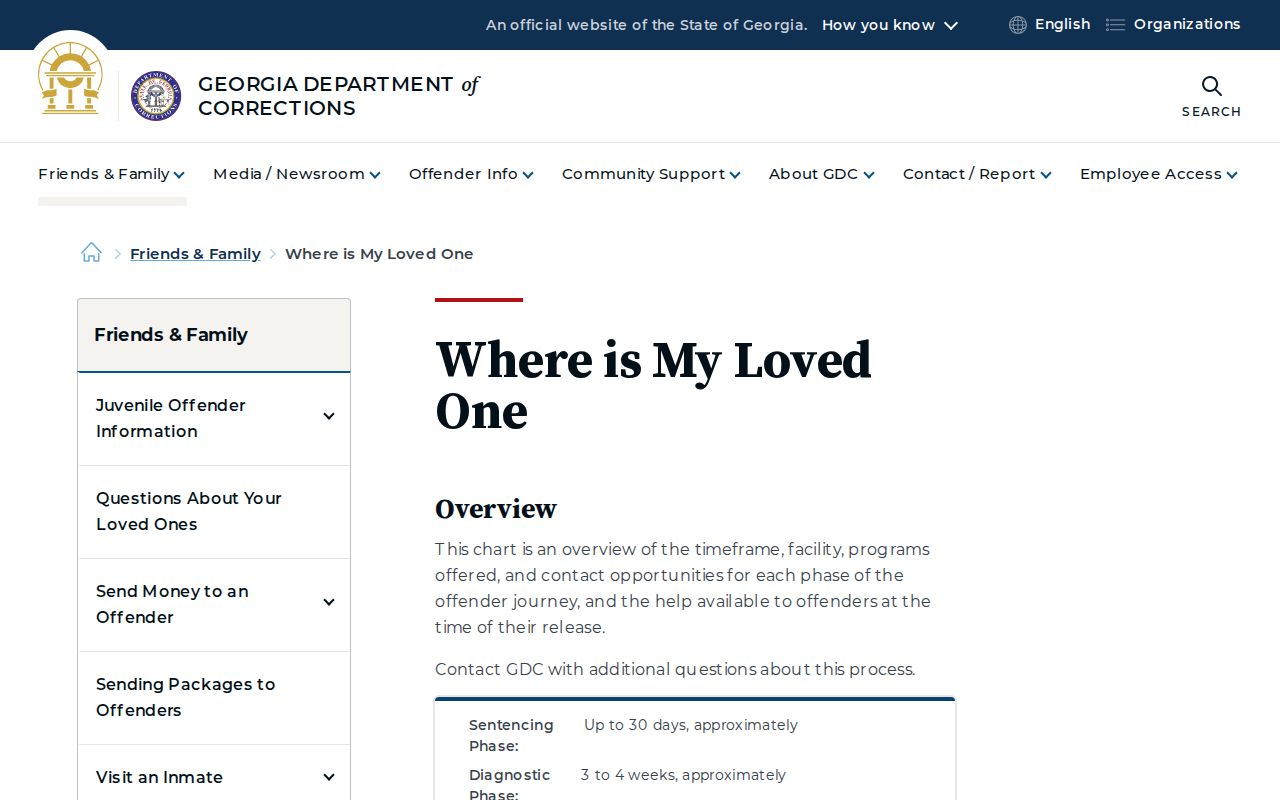
The sequence shows why leaving a DeKalb jail roster may mark transfer into state custody rather than community release.
DeKalb TPM Is Tentative
The Board says a TPM is the month when it expects to complete final review and, if appropriate, set parole release. It remains conditioned on conduct and may require completion of treatment or counseling. Misconduct reports commonly lead to postponement or cancellation. Life-sentenced cases use grant-or-deny decisions rather than the same TPM outcome.
The Board’s TPM source distinguishes the tentative month from actual release.
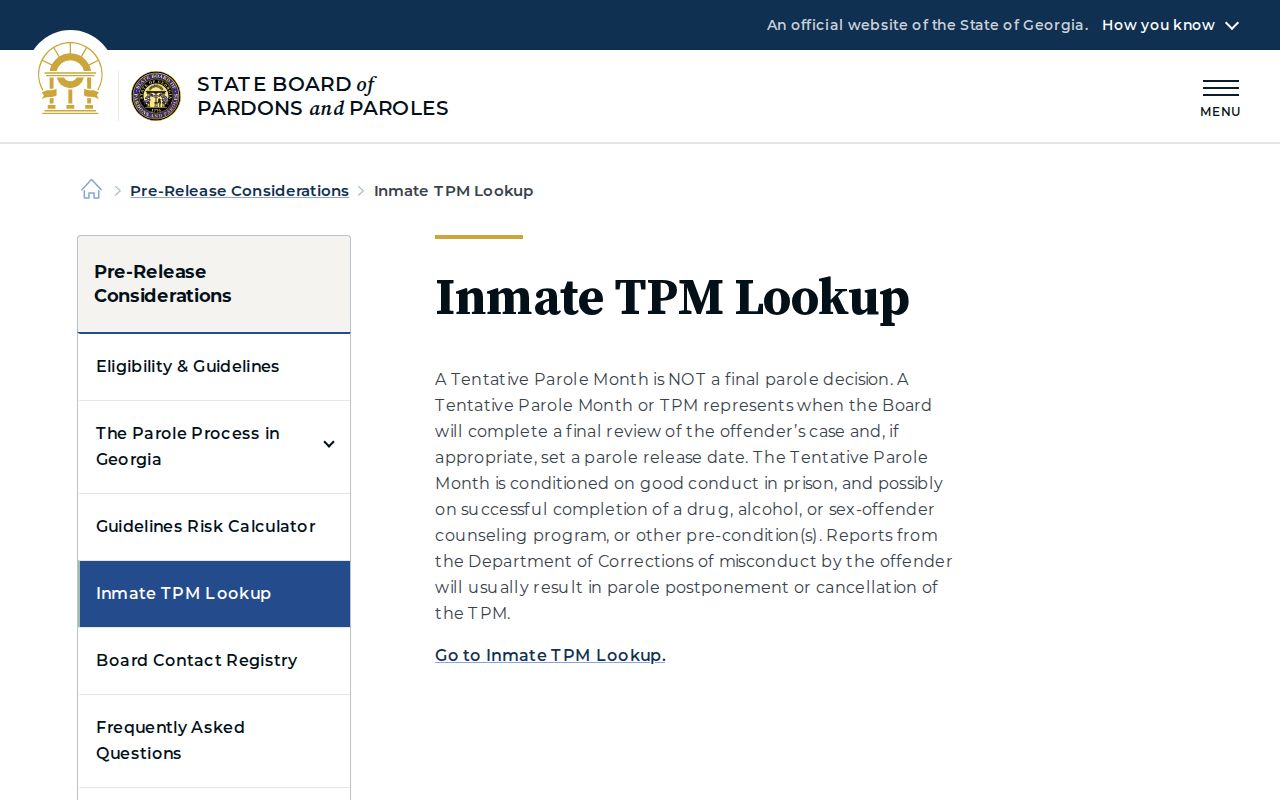
Use the lookup as one state parole record, then verify the later release event through GDC and supervision records.
DeKalb Jail Date Computation
A short county sentence may look simple on the judgment but still require a local computation. The jail must apply the sentence start, credit for time already served, and any later court order. Weekend or periodic confinement, court-ordered work release, bond changes, and transfer directions can alter the custody calendar. DeKalb Sheriff materials document a work-release program coordinated with State Court judges and the county probation office, but they do not publish a formula that lets the public calculate an exact release day.
Ask for the sentence computation or booking and release sheet when exact timing matters. Include the full name, booking number if known, case number, sentence date, and a narrow date range. Compare the response with the clerk’s judgment. GDC notes that a time-computation error tied to the sentence may require contact with the clerk in the county of conviction, which is why a court order should be checked alongside corrections data.
Bond is not a projected sentence date. DeKalb recognizes cash bond, professional bonding company bond, and property bond. Posting an authorized bond creates a path out of pretrial custody, but processing, another case, or a detainer may still prevent release. The public sources do not state a fixed number of hours from payment to exit. A bond receipt and a later jail release record answer different questions.
Georgia Parole Eligibility Dates
Eligibility is the point when a case may be considered, not a promise of release. Under O.C.G.A. § 42-9-45, general misdemeanor eligibility begins after six months or one-third of the sentence, whichever is greater. General felony eligibility begins after nine months or one-third, unless another law applies. Aggregate terms of 21 years or more generally become eligible after seven years. Listed violent offenses and mandatory terms can follow different rules.
The Board uses guidelines, risk information, crime severity, and case facts, but retains discretion to accept or reject a grid recommendation. A TPM can also carry program conditions. Therefore eligibility date, TPM, parole grant, effective release, and parole begin date are five different milestones. Record each label exactly rather than converting them into one supposed release date.
Request DeKalb Release Date Records
When portals conflict, request the underlying record. The Sheriff’s GovQA path is suitable for a DeKalb booking and release sheet. The sentencing clerk holds judgments and later orders. GDC Inmate Records and Information is the verification path for state offender data, while the Parole Board holds TPM and decision records. A narrow request is easier to route and less likely to mix people with similar names.
Georgia open-records law allows reasonable search, retrieval, redaction, production, and copying charges. Agencies must make records that can be located available within three business days or explain the response and expected timing when more work is needed. Some information may be redacted or exempt. Ask for an existing record rather than demanding that an office create a new release-date calculation.
Preserve the date each portal was checked. A jail roster, GDC entry, TPM lookup, and VINELink alert may update at different times. The newest screen is not always the most complete record. The official release sheet or state discharge entry should control the final conclusion.
Identity checks are just as important as date checks. Use a GDC ID, booking number, or case number when available, then compare the full name and facility. A partial-name result can belong to another person. If the date appears inconsistent with the judgment, ask the sentencing clerk whether the recorded sentence or credit changed before treating the portal as wrong. For a person who moved between DeKalb County Jail and a state facility, request both agencies’ records and place the transfer between them. That sequence distinguishes a local release from a state intake and prevents the transfer date from being mistaken for freedom from custody.